Switzerland Banking regulation
UBS capital: Council of States votes Wednesday, government and bank at odds
The Council of States decides Wednesday on new capital requirements for UBS, after Finance Minister Karin Keller-Sutter and CEO Sergio Ermotti reaffirmed opposing positions at the Finance Forum in Zurich.
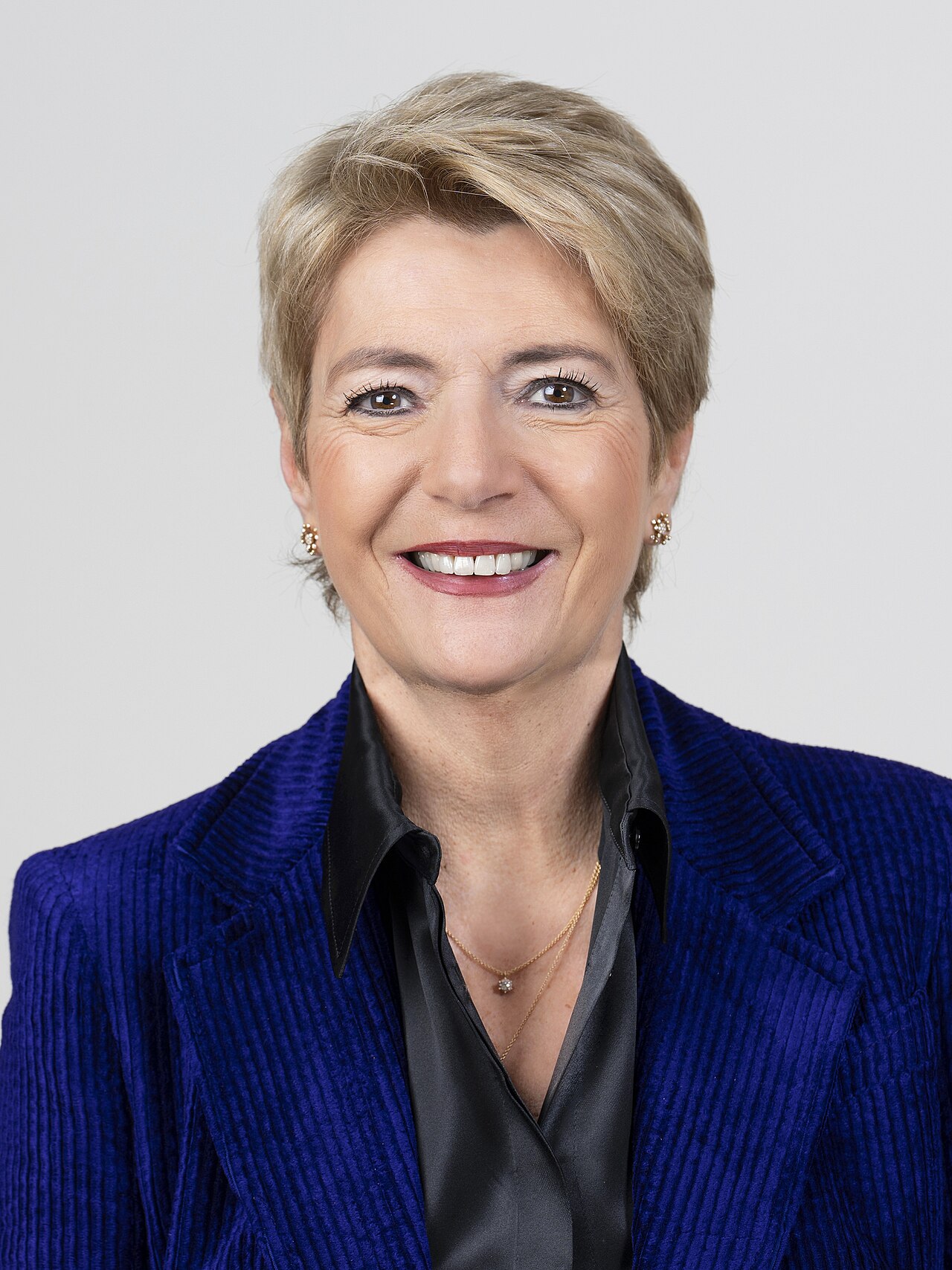
The Council of States votes on Wednesday on the so-called "Lex UBS", the new regulatory framework designed to strengthen systemically important banks after the collapse of Credit Suisse and its takeover by UBS in 2023. The main issue concerns the capital the bank must set aside to cover its foreign holdings and activities.
Two positions have long been at odds on this issue: that of the Federal Council, defended by Finance Minister Karin Keller-Sutter, and that of UBS, backed by CEO Sergio Ermotti. On Tuesday the two appeared separately at the Finance Forum in Zurich, without debating each other directly.
Ermotti defended the bank's repeated interventions in the political debate and again opposed the tightening of capital rules proposed by the government. "Vogliamo semplicemente trovare una soluzione che sia positiva per la Svizzera, ma anche per UBS" ("We simply want to find a solution that is positive for Switzerland, but also for UBS"), he said, adding that he still considered a satisfactory outcome possible for all parties. He criticized how long the debate had dragged on and its increasingly emotional tone, calling it unprecedented for Switzerland. The CEO said he felt responsible for the group's employees worldwide, particularly the roughly 30,000 people employed in Switzerland, as well as for clients and shareholders. He called on the bank to state its position with complete clarity, noting that false statements about capitalization and the consequences of the new rules would carry legal liability, and that supervisory authorities had made no such accusations against the bank in the past two years.
Keller-Sutter, for her part, confirmed that the government is not changing course. The minister said she had again consulted the Swiss National Bank, which remains in favor of stricter requirements. "Non sappiamo ancora esattamente come andrà a finire" ("We don't yet know exactly how this will end"), she said, adding that she trusted Parliament. After Wednesday's vote, the dossier moves to the National Council, and a referendum cannot be ruled out at the end of the process.
Who pays in a crisis
For Keller-Sutter, the issue is not a matter of left versus right, but of who bears the risk in a crisis: the shareholder or the taxpayer. According to the minister, all systemically important banks, including foreign ones, effectively enjoy an implicit state guarantee, because the state could not simply stand by in the event of a failure without harming the entire economy.
The central issue remains the coverage of UBS's foreign holdings. The Federal Council proposes full coverage through CET1 capital, the highest-quality form of bank capital, at an estimated cost of around 20 billion dollars for UBS. The Council of States' Economic Affairs Committee has instead worked out a middle path: half CET1 capital and half AT1 bonds, instruments that can be written down in the event of severe difficulties, as happened in the rescue of Credit Suisse.
Several leading Swiss business organizations have urged Parliament to avoid excessive regulation. According to these associations, overly strict rules risk translating into higher financing costs and reduced credit availability for companies, especially small and medium-sized enterprises. It remains to be seen whether Parliament will strike a balance between the capital strength demanded by the central bank and the risk of raising costs for the real economy, without undermining the competitiveness of the financial center.
Comments
There are no comments yet. Yours can be the first voice.

_(cropped).jpg)