Culture Contemporary art
Nicolas Party, from Lausanne's trains to pastel on museum walls
The Swiss artist gave up oil painting after seeing a Picasso pastel at the Beyeler Foundation. This year his work is on show across three continents.
Nicolas Party's paintings are recognisable from a distance: bright colours, simplified forms, compositions with the sharpness of a graphic sign. The Swiss artist is also known for the way he uses exhibition spaces, covering them with murals that turn the architecture into a temporary work. This year his work has passed through major exhibitions on three continents.
Behind the visual immediacy lies an insistent relationship with art history. His works contain references ranging from Rembrandt to Picasso and crossing symbolism and surrealism.
The technical turn came from a chance encounter. During his studies at ECAL in Lausanne and then over six years in Glasgow, Party worked mainly in oil, but the method held him back: layering, drying times, endless revisions. He produced three paintings a year because he never stopped reworking them, and he has said he loved the finished paintings but not the process that produced them. In parallel he made murals at galleries' invitation, with spray paint and charcoal: ephemeral, physical, immediate works.
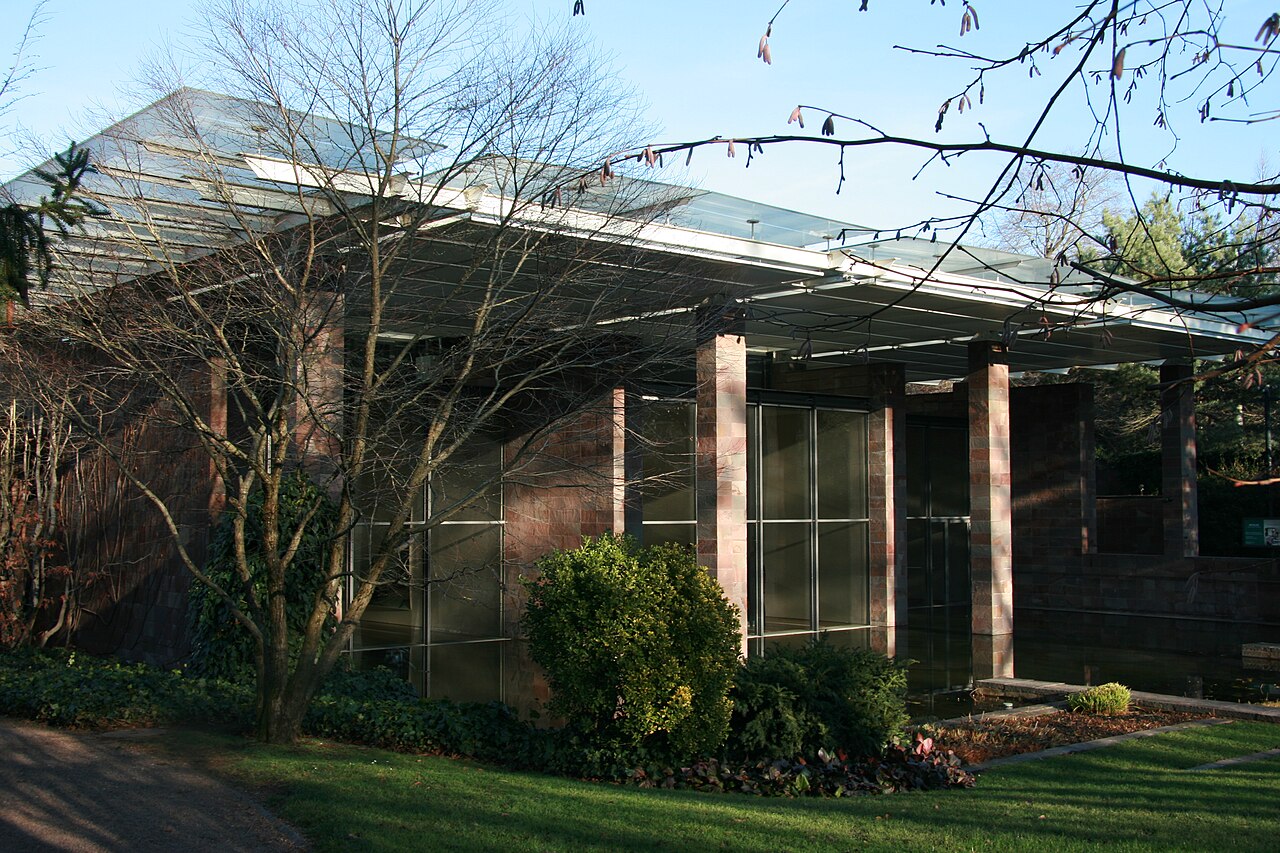
At the Beyeler Foundation in Basel he found himself in front of Picasso's Head of a Woman, a pastel portrait from 1921. The next day he bought pastels, paper and a postcard of that work. Pastel cannot be corrected: it forces an immediate decision. Party explained that this limit paradoxically made him freer and far more productive, and that producing more means failing and succeeding more often, and so learning faster.
Repetition as method
The genres he works in are the most conventional in Western painting: portrait, landscape, still life. The choice is deliberate. As Josef Albers returned to the square and Morandi to bottles, Party uses repetition in order to look more closely. Among his recurring motifs, trees have taken on an almost devotional importance.
Many of his exhibitions grow out of an encounter with historical figures, from Rosalba Carriera to Auguste Rodin and Camille Claudel. For him copying is not quoting: it is the way one really comes to know a work. Images today are consumed in three seconds on a screen, he observes; drawing or painting something, by contrast, forces you to give it the time it needs, and that time stays with you.
The roots of his language, though, lie elsewhere. From the age of twelve and throughout his adolescence, Party painted graffiti on trains and walls in Lausanne, in Geneva and beyond. That is where he learned how colour works in public space and that an image has to be grasped in an instant: the main element, he says, must be visible from far away, as in a logo.
To this he adds an idea from Michel Pastoureau, the French medievalist who has analysed how visual systems shape collective perception. Pastoureau noted that Swiss children grow up surrounded by heraldry: cantonal flags, shields, emblems. It is a visual culture founded on clarity and symbol, and it helps explain why Party's portraits are frontal, expressionless, close to icons.
Curiosity has taken him beyond the Western canon, with projects in Beijing and Seoul. While installing his exhibition Dust in the South Korean capital he studied the museum's collection alongside its curators, learning a great deal about Korean ceramics. He would now like to work in Istanbul and in Egypt, while acknowledging that ten lifetimes would not be enough to explore all those cultures.
Comments
There are no comments yet. Yours can be the first voice.