Canton Water shortage
Lake Maggiore nears its August 1990 record low
On Sunday evening the level of Lake Maggiore fell to 192.12 metres, just three centimetres above the August low recorded in 1990. A slight overnight recovery followed, but the basin remains in extreme drought, with heavy consequences for agriculture in the Po Valley.
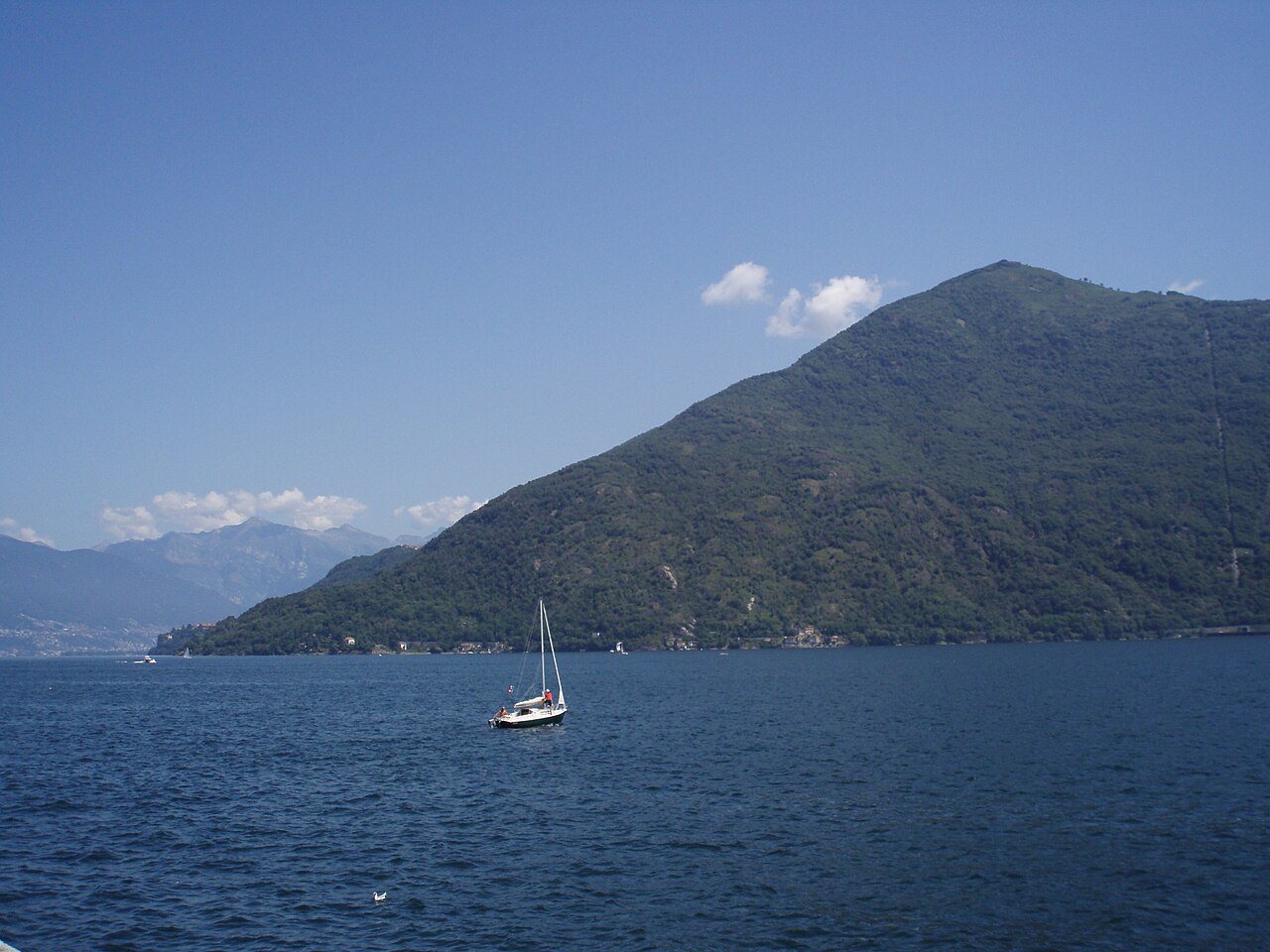
The level of Lake Maggiore, measured in Locarno, fell on Sunday evening to 192.12 metres above sea level. The figure comes close to the negative August record set in 1990, at 192.09 metres. The absolute historic low, 192.05 metres, dates back to January 1947.
A situation of extreme drought
According to the laghi.net platform, the basin is in a state of extreme drought. Its filling level compared to the theoretical regulation volume has dropped to 3-4%. During the night between Sunday and Monday, the level rose slightly, to between 192.19 and 192.20 metres, moving back above the minimum regulation threshold. The recovery is due to reduced outflows towards Sesto Calende and to rainfall over the catchment area, fed mainly by the Ticino, Maggia and Toce rivers.
The lake's regulation system has been in operation for more than eighty years. The Miorina dam, on Italian territory, has been active since 1943 and controls outflows through 120 gates. With so little water in the basin, it now has very little room for manoeuvre. On Monday morning, 60,000 litres per second were flowing out, a quarter less than the multi-year average for this time of year, while 100,000 litres were flowing in. In previous days, inflows had dropped below 20,000 litres per second, because of the low flow of the rivers between Monte Rosa and San Bernardino.
The water shortage weighs above all on the Po Valley. In the Lomellina, Pavese and southern Milan areas, the Ticino river is used both to irrigate fields and rice paddies and to generate hydroelectric power. The agricultural sector is already suffering significant losses. To ease them, authorities decided to increase outflows from Lake Lugano via the Tresa river. Despite this extra inflow, the level of Lake Maggiore kept falling until Sunday evening.
The situation brings back a question that recurs every dry summer: how to share a scarce resource between different uses, when irrigation and energy production compete for the same water. Decisions on outflows affect farming communities that have no seat at the table, and the costs of drought fall more heavily on those who work the land than on those who run the hydroelectric plants.
Images and video
Comments
There are no comments yet. Yours can be the first voice.