Switzerland Banking regulation
AT1 bonds do not work, a Basel law professor warns
Corinne Zellweger-Gutknecht rejects the idea of covering half of UBS's foreign holdings with AT1 securities. In a crisis, she argues, they would not be converted in time.
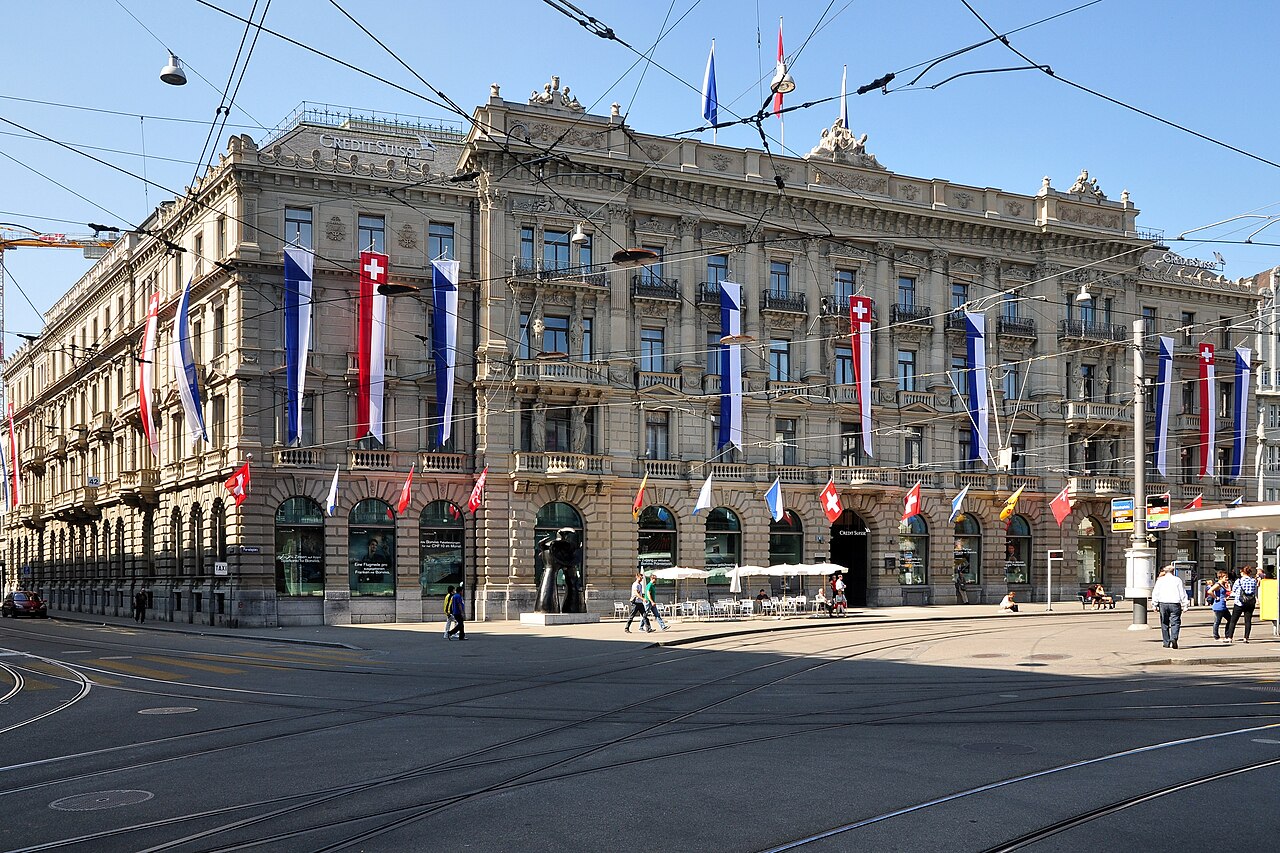
In Parliament a group of members of the Council of States is proposing to soften the capital rules the Federal Council wants to impose on UBS. The big bank would not have to fund its foreign holdings entirely with common equity tier 1 capital: half the cover could come from AT1 bonds, securities whose value can be written down to zero when the institution runs into trouble. That is what happened at Credit Suisse.
Corinne Zellweger-Gutknecht, professor of private and commercial law at the University of Basel, believes that solution does not hold up. In an interview with the "NZZ am Sonntag" she says AT1s in their present form have serious shortcomings and would not work in practice: in a crisis the bonds would not be converted into equity quickly enough. UBS, she says, would have failed long ago. For her this is a design flaw. Together with Yvan Lengwiler, professor of economics also in Basel, she has put forward a multi-tier reform proposal for AT1s.
A structure that echoes Credit Suisse
The trouble, Zellweger-Gutknecht argues, is that today's UBS resembles Credit Suisse. The parent company, UBS AG, does not merely hold the foreign subsidiaries. It also runs a large banking business for foreign clients, most of the investment bank, and the group's treasury.
The collapse of Credit Suisse showed that a bank must be able to sell its foreign subsidiaries in good time when a crisis arrives. Today it cannot, because those holdings are backed by equity only to 45 per cent. Every dollar of value a subsidiary loses therefore also eats 55 cents of the capital the bank sets aside for other banking and investment banking risks. The write-down losses would become unbearable and a sale, in practice, impossible.
The professor is calling for holdings to be backed entirely by tier 1 equity. She concedes, however, that the debate could end in a compromise of eighty per cent equity and twenty per cent AT1, or go to a popular vote. Either way she wants rules that hold even when the bank's management decides to press ahead again.
Zellweger-Gutknecht wrote an expert report for the parliamentary commission of inquiry into the failure of Credit Suisse and advises, among others, the Federal Department of Finance, the National Bank and FINMA.
Parliament will therefore have to weigh two sets of costs. On one side the extra capital, which weighs on the bank's return and on the price of credit. On the other the risk that in a crisis the bill lands once again on the public accounts.
Comments
There are no comments yet. Yours can be the first voice.