World Middle East
Netanyahu rejects the Gaza plan: no withdrawal without Hamas disarmament
The Israeli prime minister turns down the Board of Peace’s fifteen-point document and restates his refusal of a Palestinian state. Meanwhile a pilot construction site financed by the Emirates has already started in Rafah.
For the first time since 31 July, when Donald Trump announced the Gaza agreement two days after his face-to-face meeting with Benjamin Netanyahu, the Israeli prime minister has made his position public. Israel rejects the Board of Peace’s fifteen-point document. The army will not withdraw until Hamas has been disarmed of all weapons, heavy and light.
Netanyahu also rejected the Palestinian state scenario set out in the plan. As long as he is prime minister, he said at the opening of the cabinet meeting, there will be none, neither in Gaza nor in the West Bank. His words immediately drew support from the hardline wing of the government. Betzalel Smotrich thanked him for making clear that there would be no withdrawal of a single millimetre from the Strip and that reconstruction would not begin before the total dissolution of Hamas.
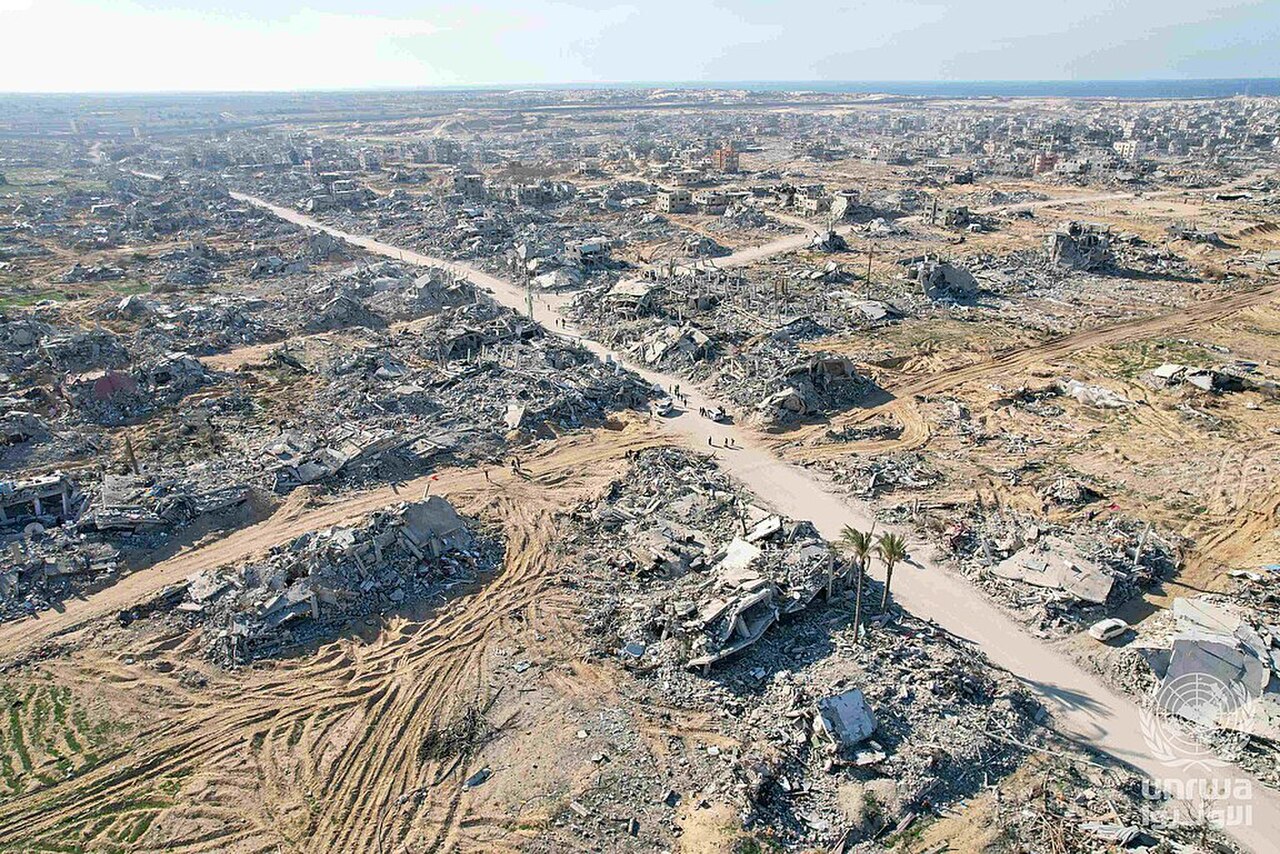
The ground, however, tells a different story. Military radio reports that two weeks ago, alongside the decision to let the first Moroccan and Ugandan soldiers of the International Stabilisation Force into the Strip, the political level approved the start of reconstruction work in a pilot zone in Rafah, inside the yellow line still under Israeli army control. The project is called «Green Rafah» and is run by the civil-military coordination centre led by US Centcom, active in southern Israel since October. Funding comes mainly from the United Arab Emirates.
According to Channel 11, Shin Bet intends to move into that area members of the militias armed by Israel that cooperated with the army during the war: the Abu Shabab, Doghmush, al-Astal and al-Mansi clans, targeted by Hamas’s Sahm unit. A source in the prime minister’s office told the broadcaster that the first inhabitants of the new Rafah will be opponents of Hamas, and that this serves Israeli interests. Not far away a compound has already been built to house the first 150 soldiers from Rabat serving with the international force, who surveyed the area in May.
The electoral calendar
Netanyahu has not taken the other step back demanded by Smotrich, namely revoking authorisation for the international force to enter Gaza. According to commentators he will struggle to resist Trump’s will on this point, but he will do everything possible to postpone any withdrawal beyond the elections of 27 October. From Board envoy Nickolay Mladenov, whom he met in Jerusalem on Monday, the prime minister had already secured that the army’s withdrawal will only follow the disarmament of Hamas, personal weapons included.
With that result already banked, today’s categorical refusal looks above all like a message to an Israeli electorate that is shifting to the right. Netanyahu’s main rival, Gadi Eizenkot, called the publication of the roadmap a government failure measured against the war’s declared aim of eliminating Hamas. The prime minister replied by noting that the criticism comes from someone who wanted withdrawal from the entire Strip and did not want to attack Lebanon or Iran. Eizenkot left the national emergency government in June 2024, in disagreement with the decision to take Rafah. Trump, who appears to be restraining escalation with Iran at least until the midterm elections, has not yet publicly backed his Israeli ally.
Images and video
Comments
There are no comments yet. Yours can be the first voice.