Switzerland Forests and climate
Beech trees buckle under the heat as Swiss forests set to change
Increasingly hot, dry summers are weakening beech trees across Switzerland: in the Hardwald forest near Basel, two-thirds of the trees observed are now severely damaged. South of the Alps too, researchers are noting the first signs of stress.
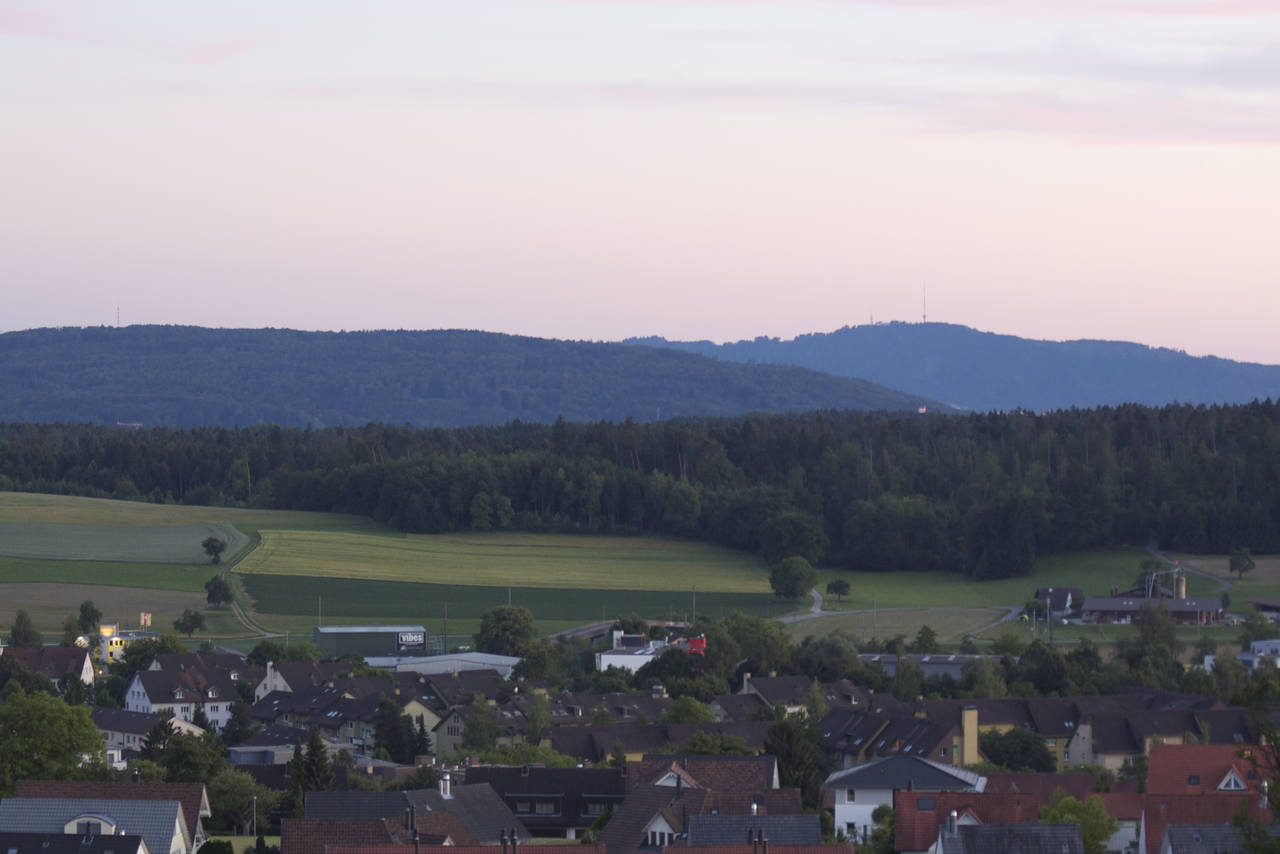
In the Hardwald, a forest near Basel, researcher Sabine Braun has been studying beech canopies for forty years. She has never seen anything like this: two-thirds of the trees have brown, yellow or heavily thinned foliage. Braun works for the Institute for Applied Plant Biology (IAP), which examines 12,000 trees in 23 cantons every year on behalf of cantonal authorities.
Usually, in autumn, beeches reabsorb nutrients from their leaves before they fall. This year, however, the leaves are drying out directly on the tree. In some cases even leaves that are still green turn yellow and fall, as if scorched by the sun, Braun explains.
The phenomenon itself is not new: already during the hot summer of 2018, the Hardwald was closed to the public because of the risk of falling branches, and only a quarter of the trees damaged at the time survived. But this year the number of affected beeches has almost tripled compared with 2018. According to Braun, in northwestern Switzerland the beech has almost no future left, except on the deepest soils.
The beech is currently the most common deciduous tree in Switzerland, accounting for around 19 percent of all trees. Norway spruce, the country's most common conifer at around 40 percent, is also suffering from drought: weakened trees become vulnerable to bark beetles and, if infested, die quickly the following year. For researchers at WSL, the federal forest research institute, the question now is which species will still be able to withstand the climate of the future.
Experts agree on one point: species diversity will be crucial, because a mixed forest withstands disease and pests better than one dominated by just a few species. Among the most promising alternatives are silver fir, which is more resistant to bark insects, and species such as sessile oak and cherry, which tolerate drought better. Mediterranean species that are most heat-resistant, such as holm oak, cannot survive the winter frosts still recorded here. The change will also carry an environmental cost: as many centuries-old trees disappear, Swiss forests will in future store less carbon dioxide, a service forests have so far provided to everyone, not just to their owners.
And in Ticino?
South of the Alps, climate pressure has so far been somewhat less pronounced, explains Boris Pezzatti of WSL's research group in Cadenazzo: beeches there grow mainly above 1,000 metres, while chestnut forest dominates at lower elevations. Even here, though, suffering specimens can be seen, especially those with large canopies or on the forest edge. According to Pezzatti, it is not always south-facing trees that suffer the most: what matters is each tree's growth history and the water balance it has developed over time. A forest suffering today does not mean the species will disappear from that area: the beech has a certain capacity to adapt, and new generations could develop root systems better suited to water scarcity from the outset. Still, Pezzatti says, it remains plausible that the beech's ideal range will gradually shift to higher altitudes.
Comments
There are no comments yet. Yours can be the first voice.