Switzerland Federal Council
Three SVP cantonal ministers in the race for the Federal Council
Among the eight candidates the SVP has put forward to succeed Guy Parmelin are three cantonal ministers. Political scientist Adrian Vatter looks at whether cantonal government experience is an advantage in reaching the Federal Council.
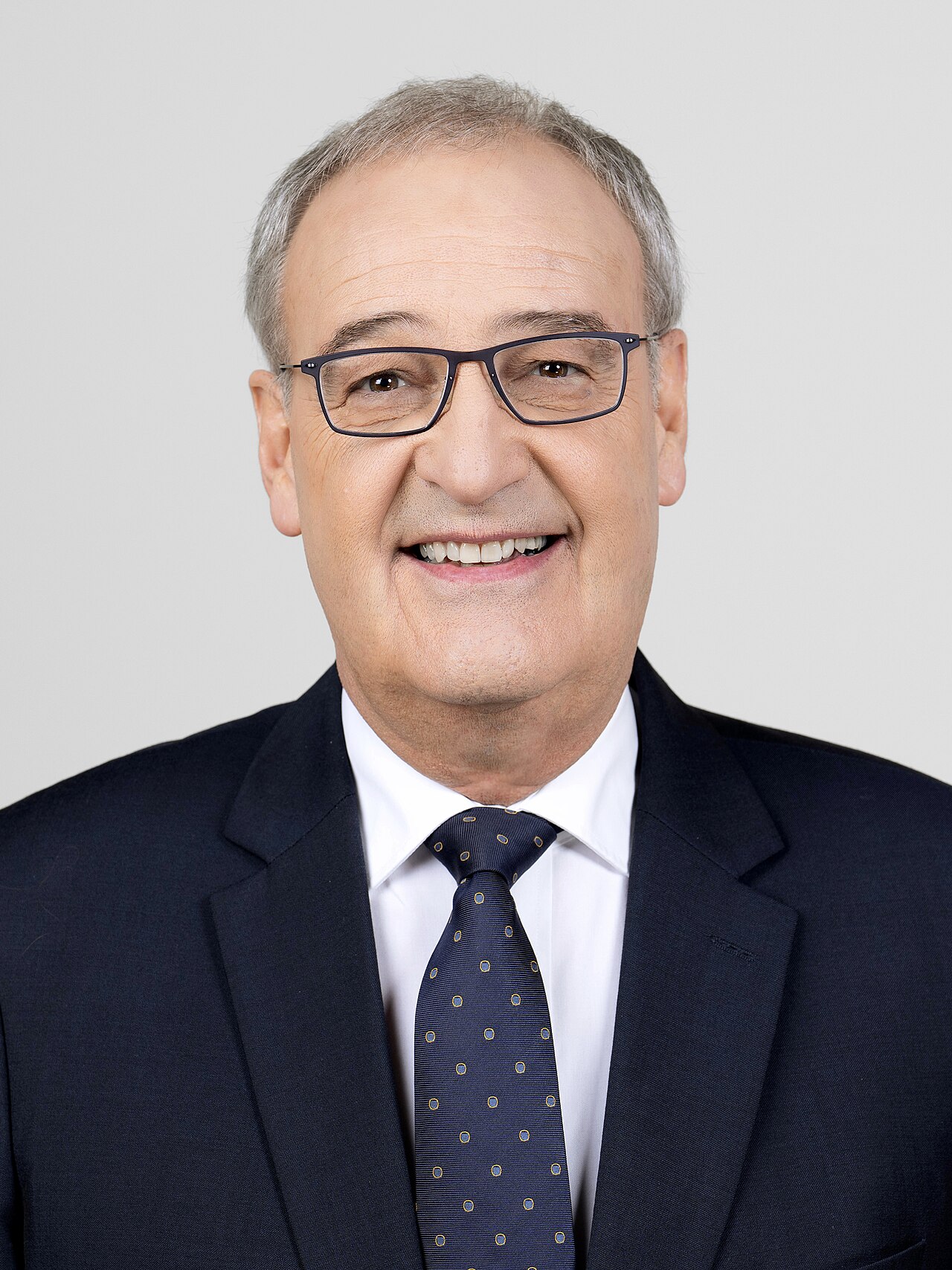
The Swiss People's Party (SVP) revealed about ten days ago the list of its eight candidates to succeed Guy Parmelin on the Federal Council: seven men and one woman. Three of them are cantonal ministers: Franz Ruppen from Valais, head of the Department of Territory, Jean-Pierre Gallati from Aargau, director of health, and Pierre Alain Schnegg from Bern, who is also responsible for health in his canton.
The presence of three candidates holding a cantonal mandate raises a question: is experience in cantonal governments an advantage or a disadvantage in the race for the Federal Palace?
According to political scientist Adrian Vatter, of the University of Bern, cantonal experience is a qualification worth taking into account. Two elements matter in particular: the ability to run a department made up of different offices and hundreds of employees, and the ability to fit into a collegial government, including making compromises.
Rare precedents in history
Swiss history offers a few cases of cantonal ministers elected to the Federal Council. In 1999, Ruth Metzler, finance minister of the canton of Appenzell, was elected, then for the PDC. In 2002 came the Geneva Social Democrat Micheline Calmy-Rey. In 2007 the Federal Assembly elected, against the wishes of its own party, the SVP, the Graubünden politician Eveline Widmer-Schlumpf. More recently Beat Jans, from Basel, and Martin Pfister, from Zug, were elected.
These remain exceptional cases, though. Of the 125 members of the federal government elected since 1848, 68 came from the National Council, 40 from the Council of States, and only 13 from cantonal governments. Vatter explains that parties usually nominate parliamentarians already active in Bern, because they are already known to the members of the Federal Assembly, the body that elects the government. The personal relationships built in parliament therefore represent an important advantage over those who work in the cantons.
For the three cantonal-minister candidates, the prospects are not equal. According to Vatter, Pierre Alain Schnegg currently has the best chances, since besides being a cantonal minister he is also French-speaking, another relevant criterion. His 63 years, the political scientist adds, are not necessarily a disadvantage, since they would mean a term that is not too long. It therefore remains possible that one of the three cantonal ministers could secure a seat in the federal government.
Comments
There are no comments yet. Yours can be the first voice.