Economy Air transport
Lugano Airport: federal concession renewed until 2056
The Federal Department of Transport has renewed the concession of Lugano Airport for 30 years. The new director speaks of a secure time horizon for planning investments that have been stalled for decades.
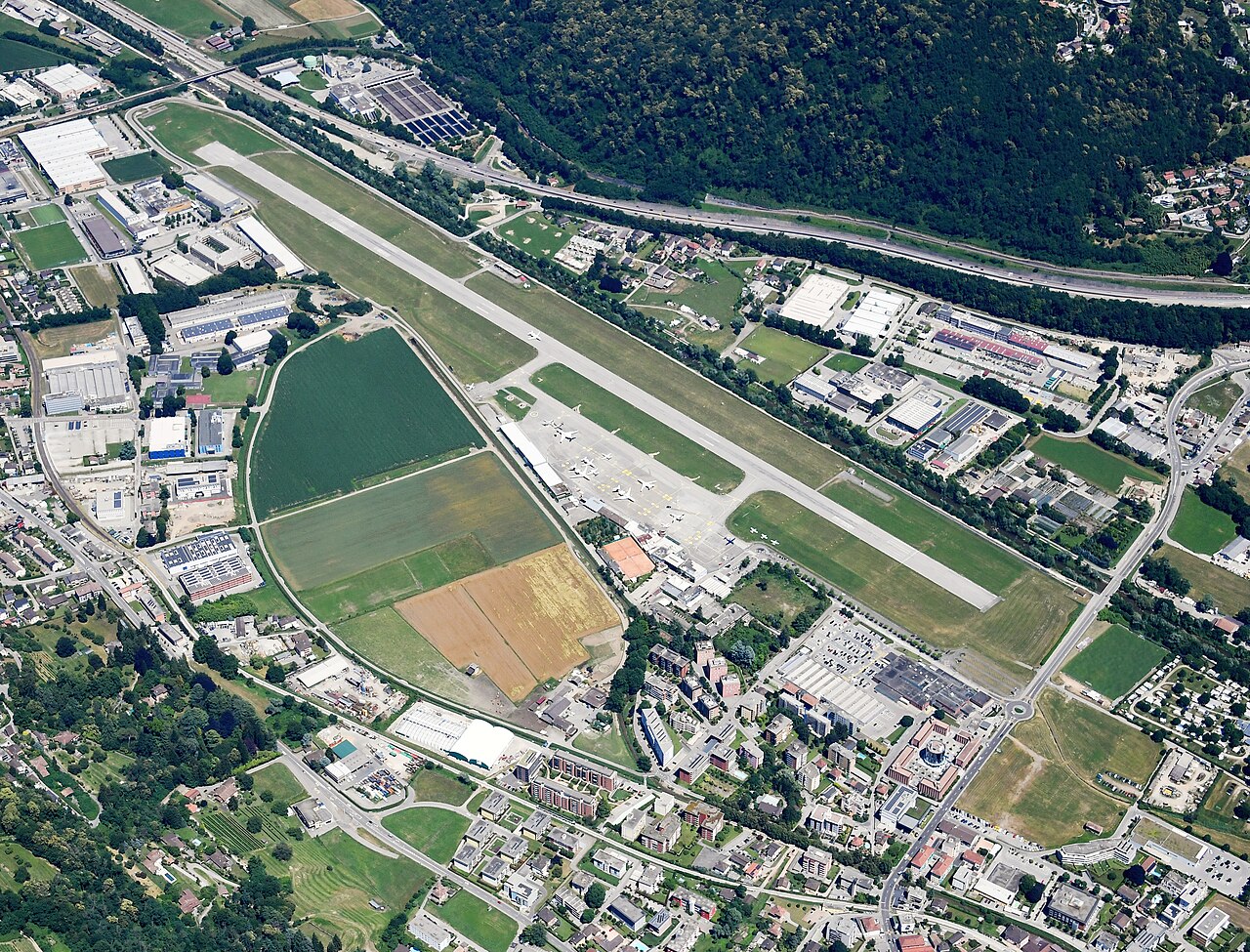
In recent days the Federal Department of Transport renewed the concession until 2056. The airport thus gains some breathing room to carry out investments that have been stalled for decades, and to reposition itself in an aviation market undergoing major changes.
The new director, Christian Castelli, describes the decision this way: «Il rinnovo della concessione dà un orizzonte certo» (the renewal of the concession gives a secure horizon). Over 30 years, Castelli adds, better planning becomes possible.
A working group chaired by the head of the department (capo dicastero) is finalising a proposal to be submitted to the Municipio. The proposal will then go to the city council (Consiglio comunale), presented by the airport management. For now, the airport is focusing on maintenance, safety and compliance.
Foreign airlines and flights to Geneva
According to unofficial reports, the idea of a public-private partnership remains on the table. The Federal Parliament could also allow foreign airlines to operate domestic flights within Switzerland. Lugano has always stressed that this opening would be essential to restore the flight to Geneva.
Castelli acknowledges that the rule «di per sé toglie un ostacolo» (in itself, it removes an obstacle), but «non crea ancora il collegamento» (it does not yet create the connection). Informal contacts have taken place in recent months, but no concrete proposal has yet arrived. According to the director, this is probably also linked to the cabotage rules still in force.
On why scheduled flights did not come back, Castelli can only offer some hypotheses. The fact is that scheduled flights ended and no airline has returned since. The law reserves these routes for Swiss airlines, which are currently not interested.
Meanwhile the airport has repositioned itself: business aviation has grown considerably, as have the Rega flights and the institutional flights. Castelli does not see this as a destiny, but as «una base su cui costruire il futuro dell'aeroporto» (a base on which to build the airport's future). Over the past five years, the airport has closed four times.
On the runway, Castelli observes that aircraft manufacturers have moved towards a certain standardisation, leaving aside aircraft suited to regional aviation. With technological innovation, however, this segment seems to be regaining interest. Aircraft able to land on shorter runways are coming onto the market, so runway length would no longer be a decisive factor.
The runway is a factor, but not the only one: there is also the mountainous region. Then there is the proximity to Malpensa: from Lugano, 30 seconds after takeoff, aircraft enter Italian airspace, which requires coordination.
Scheduled flights ended between 2018 and 2019. A company ready to connect Lugano and Geneva went bankrupt on the eve of the launch. Adria Airways, which ran the Zurich connection for Swiss, suspended flights and never returned to service. Swiss then advised Ticino customers to take the train.
In 2020, in the middle of the pandemic, the company ASA went into liquidation and the airport came under the direct control of the Municipio and the canton. That same year the Municipio launched an international call of interest to find private partners willing to invest in hangars and a new terminal. The process stalled in 2023, partly because the airport stands financially on its own, and partly due to appeals by some candidates.
The latest federal moves could nonetheless change the picture. The Council of States has approved the possibility for foreign airlines to operate domestic flights within Switzerland, a decision that still awaits approval from the National Council. If it is confirmed, scheduled routes will no longer be reserved solely for Swiss airlines. For the first time since scheduled services collapsed, the Lugano–Geneva link could attract foreign operators.
Open financial questions remain. What investments will be proposed, how much will they cost, and who will finance them? A public-private partnership would need to clarify how risks and costs are shared. Any new spending should be assessed carefully.
Comments
There are no comments yet. Yours can be the first voice.