World Scientific research
At CERN, artificial intelligence selects the collisions to study
The Large Hadron Collider produces 40 million collisions per second. This amount of data cannot be handled in full. At CERN, artificial intelligence is used to filter events and could also contribute to the design of the future accelerator.
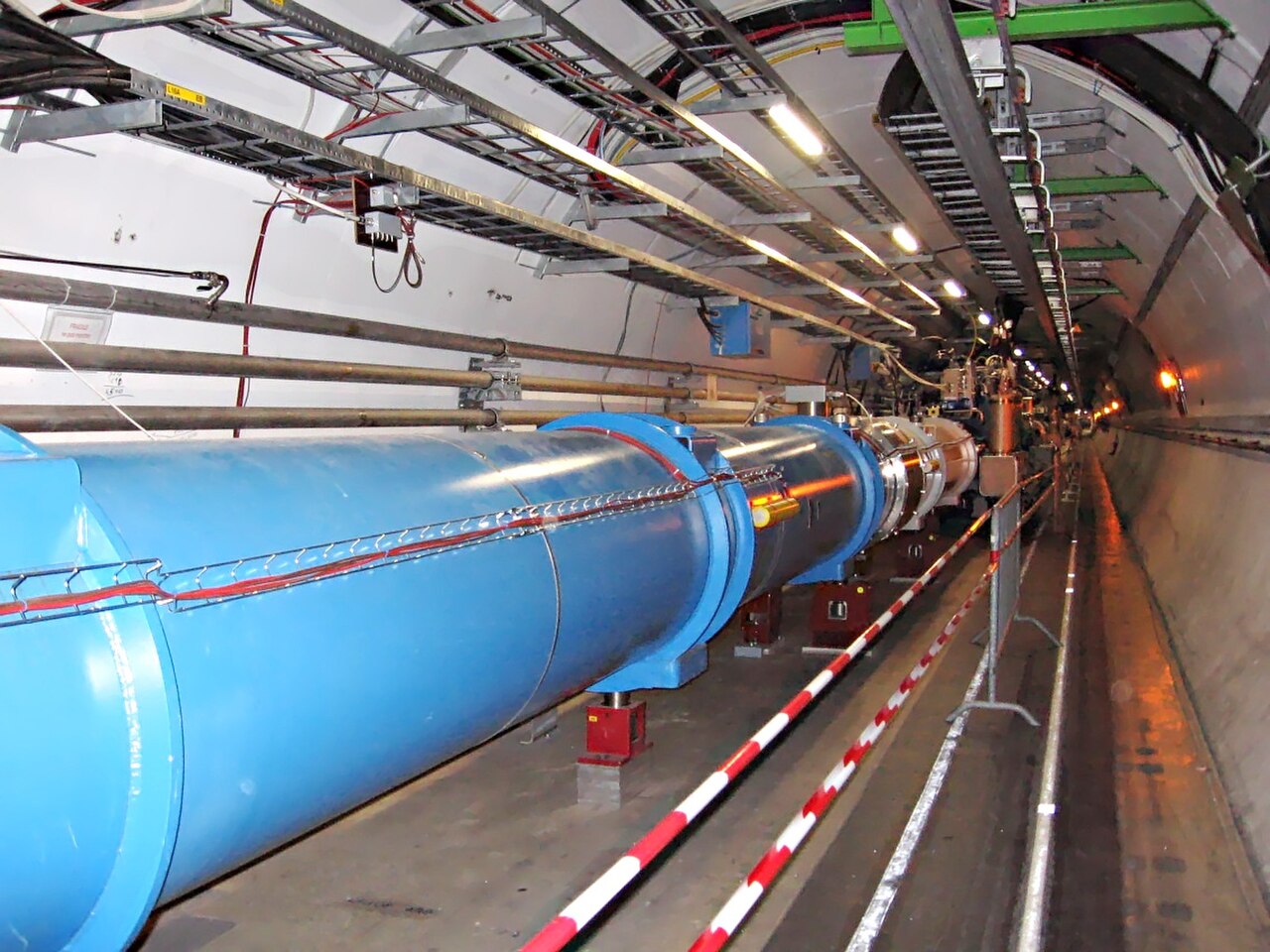
The CERN Large Hadron Collider generates about 40 million particle collisions every second. The volume of data exceeds the storage and analysis capacity of any existing computer. For this reason, the laboratory uses algorithms that can select in real time the events that may contain relevant information.
This technology operates during the experiment, while the data is being produced. Detectors surrounding the collision areas record the tracks left by the particles. An automatic system decides within a few nanoseconds which signals to keep for later analysis.
Machine learning has been used at CERN for decades. Its first application dates back to 1987 and involved identifying faults in a laboratory machine. Similar algorithms were later applied to LHC data.
From the discovery of the Higgs boson to the future accelerator
During the search for the Higgs boson, the algorithms filtered the data for traces consistent with theoretical predictions. The boson is produced rarely and disappears almost immediately. Automatic selection made it possible to identify the most promising events and contributed to the discovery announced in 2012.
CERN is now testing systems based on neural networks. These tools can operate on the detectors’ limited hardware and analyze several algorithms at the same time. One application is the search for anomalies, meaning collisions that do not correspond to the models predicted by current theories. In this way, artificial intelligence could signal phenomena that researchers had not expected to look for.
The use of AI will become even more important with the LHC upgrade. The future High-Luminosity LHC is expected to produce five to six times more data than it does today. Artificial intelligence could help examine these results and identify very rare events, such as the simultaneous production of two Higgs bosons.
CERN is also preparing the Future Circular Collider, which is intended to replace the LHC from the 2040s. AI could contribute to the design of the detectors and to the development of less expensive materials for superconducting magnets. It could also help optimize the machines according to the scientific objectives.
Technology cannot replace the accelerator, however. Building the new facility will still be essential to obtain the data needed for future experiments.
Comments
There are no comments yet. Yours can be the first voice.