Canton Alpine climate
Basòdino glacier could disappear as early as 2030
The Basòdino glacier in the Locarnese region lost four metres of thickness and retreated by 40 metres this year, record figures. Glaciologist Giovanni Kappenberger now believes it could vanish as early as 2030.
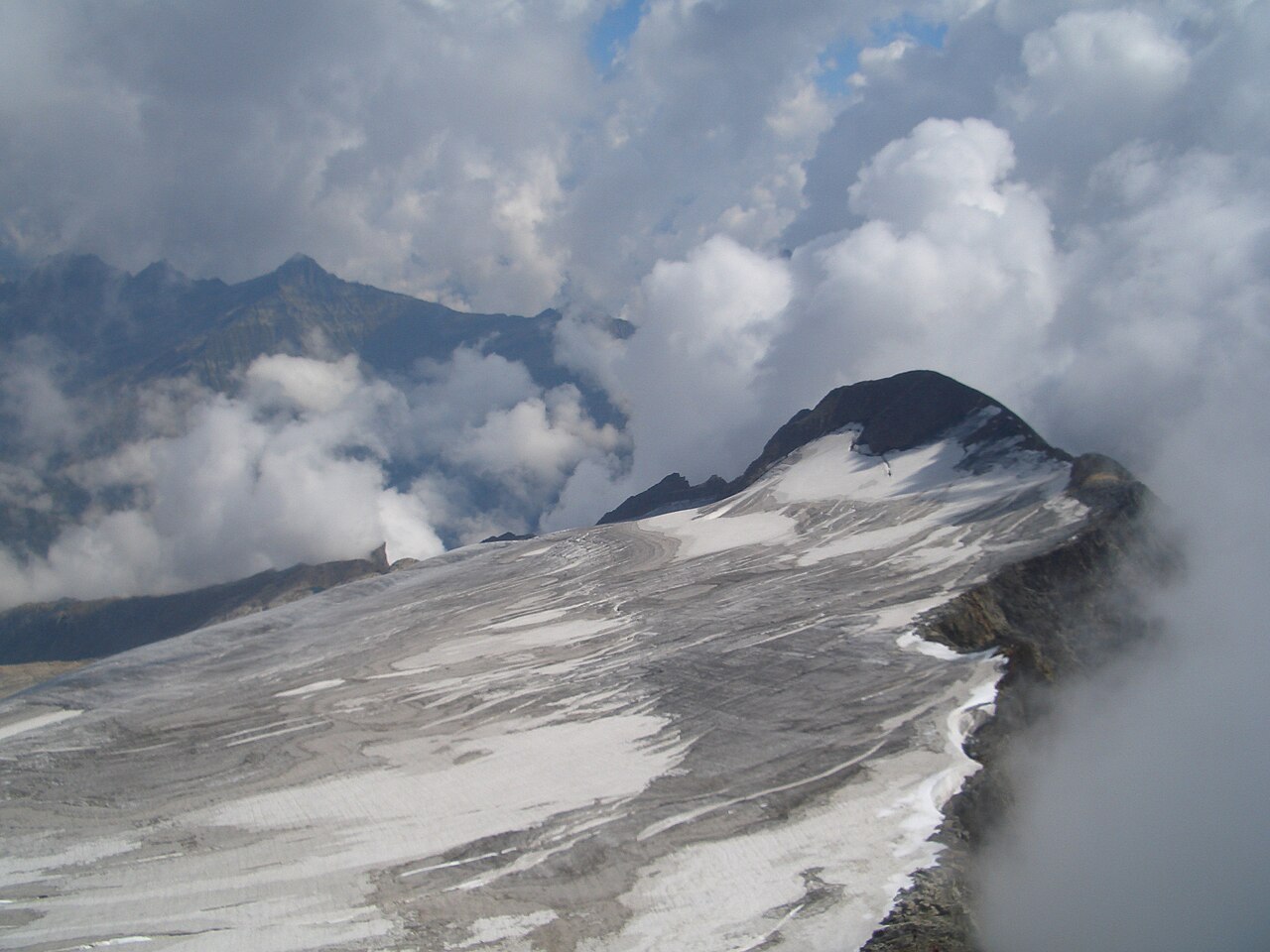
The Basòdino, in the Ticino Alps above the Val Bavona in the Locarnese region, is losing ground faster than experts had expected. This year the glacier lost four metres of thickness and retreated by 40 metres, figures the forestry section of the Department of Territory had never recorded before. That is according to Mattia Soldati, who is responsible for monitoring Ticino's glaciers and notes that the change is now proceeding exponentially. If conditions similar to last summer's were to recur in the coming years, Soldati says, within a few years only a few patches of ice would remain in the glacier's uppermost section, and the melting process could accelerate further.
Giovanni Kappenberger, a glaciologist and former collaborator with MeteoSwiss, confirms the severity of the situation. He has tracked the Basòdino for 35 years through a mass balance survey based on a network of stakes that measure winter snow accumulation and summer ice loss. His forecasts have shortened progressively: fifteen years ago he estimated the glacier's near-complete disappearance around 2050; ten years ago he brought that forward to 2040; today he speaks of 2030. This revision also reflects the numerous rocky islands that emerged this year and the thin layer of remaining ice, which in some spots is no more than two metres deep.
A negative balance for 25 years
Since 2001 the Basòdino's mass balance has consistently been negative, but the past five years have been particularly severe, with losses consistently exceeding several metres of ice each season. Kappenberger describes this trend in direct terms: «Fa male. Considero i ghiacciai indicatori di un cambiamento molto più ampio. Dispiace assistere a questa evoluzione, ma ormai resta poco da fare: dovremo adattarci» ("It hurts. I consider glaciers indicators of a much broader change. It's painful to watch this unfold, but there is now little to be done: we will have to adapt").
Ticino's case fits a trend affecting the entire Alpine arc. This summer the Bella Tola, a glacier in Valais that barely rose above 3,000 metres, melted away completely and no longer officially exists, even though three years earlier it still covered an area equal to seven football pitches. A similar fate may have befallen around thirty other Alpine glaciers in recent months. Since 1970, an estimated one thousand glaciers of various sizes have disappeared from the Swiss mountains.
For the Val Bavona and the rest of the Locarnese, the disappearance of the Basòdino raises questions that go beyond the landscape: what effect this will have on water availability downstream, and what adjustments will be needed for the people who live and work in these mountain areas. Questions that, according to the experts consulted by RSI, remain open as the glacier continues to shrink.
Comments
There are no comments yet. Yours can be the first voice.